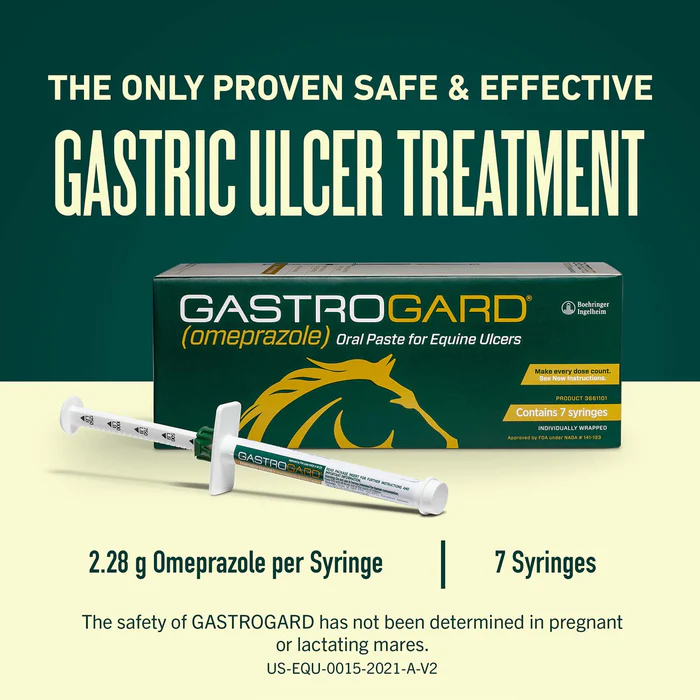
Omeprazole is an FDA-approved drug that is sold under the tradenames GastroGard® and UlcerGard. Omeprazole is used to prevent or treat equine gastric ulcer syndrome (EGUS).
Gastric ulceration is a painful condition with an extremely high prevalence in horses. Up to 90% of performance horses are affected by EGUS. High rates of pleasure horses are affected as well.
Ulcers are sores or lesions that develop in the gastric and intestinal lining of the horse. They can cause your horse to become girthy, resistant to training, agitated and generally crabby. Ulcers can also cause more severe health problems such as diarrhea, gastric bleeding, colic episodes and ill thrift.
Omeprazole treats ulcers by suppressing the production of stomach acid. It is a proton pump inhibitor medication, meaning it blocks the enzyme responsible for pumping hydrogen ions into the stomach.
Treatment for gastric ulcers can be a long and expensive commitment. Unfortunately, following treatment, there is a risk of ulcer recurrence, known as rebound ulcers. Changes in your horse’s management and feeding program can help reduce this risk.
Horse owners should be aware of how omeprazole works to prevent and heal ulcers, as well as any complications that could occur with treatment, such as rebound acid hypersecretion (RAH).
Ulcer Treatment
Why do horses get ulcers and how can you prevent or treat them?
The cause of EGUS is often multi-factorial, meaning several interacting risk factors can cause ulcers to develop. These risk factors can include diet, exposure to stress, workload, and environment.
The stomach of the horse is a highly acidic environment. Proton pumps in the stomach continuously produce acids such as hydrochloric acid (HCl) to aid in the breakdown of food.
This process occurs whether or not there is food in the stomach to digest. Over a single day, a typical 500 kg (1100 lbs) horse can produce up to 60 litres (16 gallons) of gastric acids.

The equine stomach is divided into two sections: the upper squamous region and the glandular region.
The glandular region produces mucous and bicarbonate which protects the stomach lining by naturally buffering acids.
The upper squamous region is not so lucky. This region does not produce mucous. Instead, it relies on food and saliva to buffer acids.
If a horse is grazing throughout the day, then the upper squamous region is naturally protected by food and saliva. However, if the horse’s stomach is empty, this region becomes vulnerable to the acidic environment.
This can result in painful lesions and sores develop along the wall of the digestive tract. When ulcerations develop in the stomach, it is referred to as equine gastric ulcer syndrome (EGUS).
Equine Gastric Ulcer Syndrome describes painful lesions and sores that develop in the stomach. The most common location for equine ulcers is the upper squamous region of the stomach.
Common Causes of Equine Ulcers
There are many potential contributing factors for ulcers including:
- Diet composition
- Feeding regimen
- High intensity exercise
- Environmental changes
- Social stress
- Long-term anti-inflammatory drug use (i.e. NSAIDs)
Knowing some of the causes of EGUS can help horse owners make changes to naturally prevent ulcers from occurring.
Signs & Symptoms
Not all cases of gastric ulceration are symptomatic. This means your horse may have ulcers without displaying any outward signs.
However, most horses will show signs of ulcers including changes in behaviour, reluctance to work, girthiness or irritability.
If you begin to notice some of these potential signs and symptoms of ulcers, then a visit from your vet is warranted.
Signs and symptoms to watch for include:
- Reduced appetite
- Chronic diarrhea
- Weight loss or poor body condition
- Rough coat or poor coat quality
- Reduced performance
- Aggressive or nervous disposition
- Cribbing and other stereotypic behaviours
- Colic